Research

Our laboratory aims to elucidate the mechanisms of subjective experience through mathematical theories. We broadly categorize the problems of consciousness into three pillars: 1) the quality of consciousness, 2) the levels of consciousness, and 3) the location of consciousness. We address fundamental questions such as: What determines the qualitative difference between visual and auditory experiences? Why does consciousness fade during deep sleep? Our primary working hypothesis is Integrated Information Theory (IIT), which posits that the essence of consciousness lies in "intrinsic information". While we utilize the framework of IIT as a starting point, our primary focus is to overcome the theoretical and computational limitations that currently hinder the scientific testing of such mathematical theories.

To establish a rigorous basis for experimental verification, we tackle two critical hurdles. The first is the empirical challenge: How can we quantify subjective experiences as mathematical objects in psychophysical experiments? To address this, we propose a structural approach that characterizes the relational geometry of subjective experience, which we term "qualia structures." The second is the mathematical and computational challenge: How should we practically estimate theoretical quantities (e.g., integrated information) in large-scale neural systems? To handle this complexity, we employ tools from information geometry, dynamical systems theory, network control theory, and stochastic thermodynamics. These methods allow us to characterize causal relationships in the brain and develop practical algorithms for computing information-theoretic measures that were previously infeasible.

By combining these mathematical methodologies with experimental collaborations, we aim to bridge the gap between theory and data. For example, we analyze neural activity during sleep and anesthesia to verify if theoretical measures correctly track changes in consciousness levels, and we investigate whether the mathematical structure of subjective experiences correlates with psychophysical data. Ultimately, our goal is to build an empirical foundation for testing not only IIT but other consciousness theories in general. By facilitating fair comparisons among competing hypotheses, we aim to advance beyond current theoretical limitations and bridge the gap between subjective experience and neural activity.

Below, we introduce specific research projects addressing these topics.

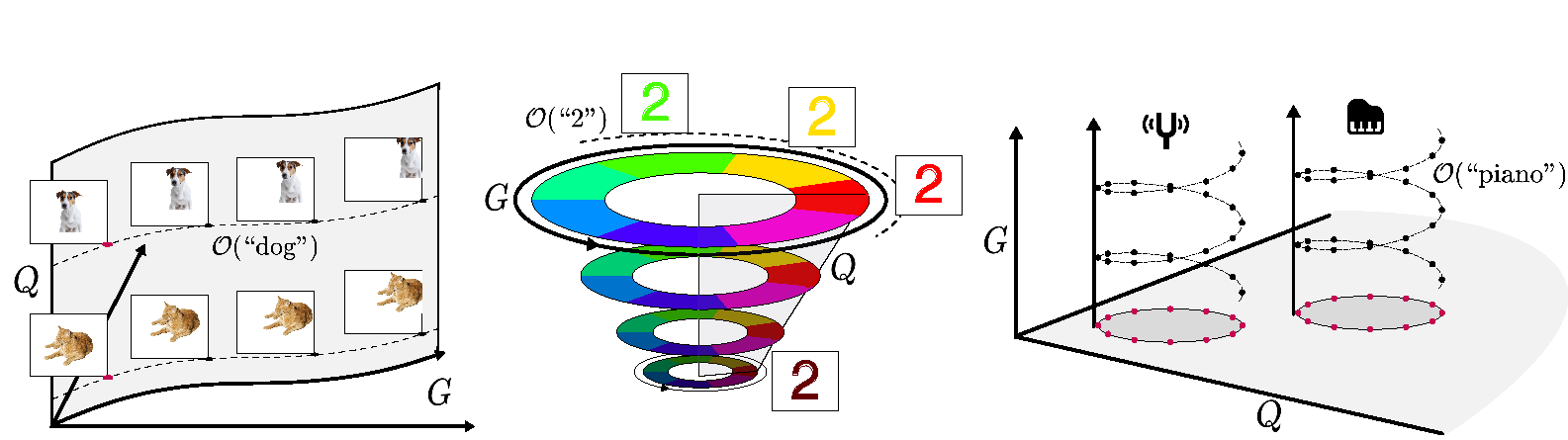
Qualia structure paradigm

We quantify the quality of consciousness, or qualia, based on the relational structure of subjective experiences. By obtaining qualia structures from psychological experiments, we can compare them across individuals or relate them to the relational structures of neural activity.

Key Publications
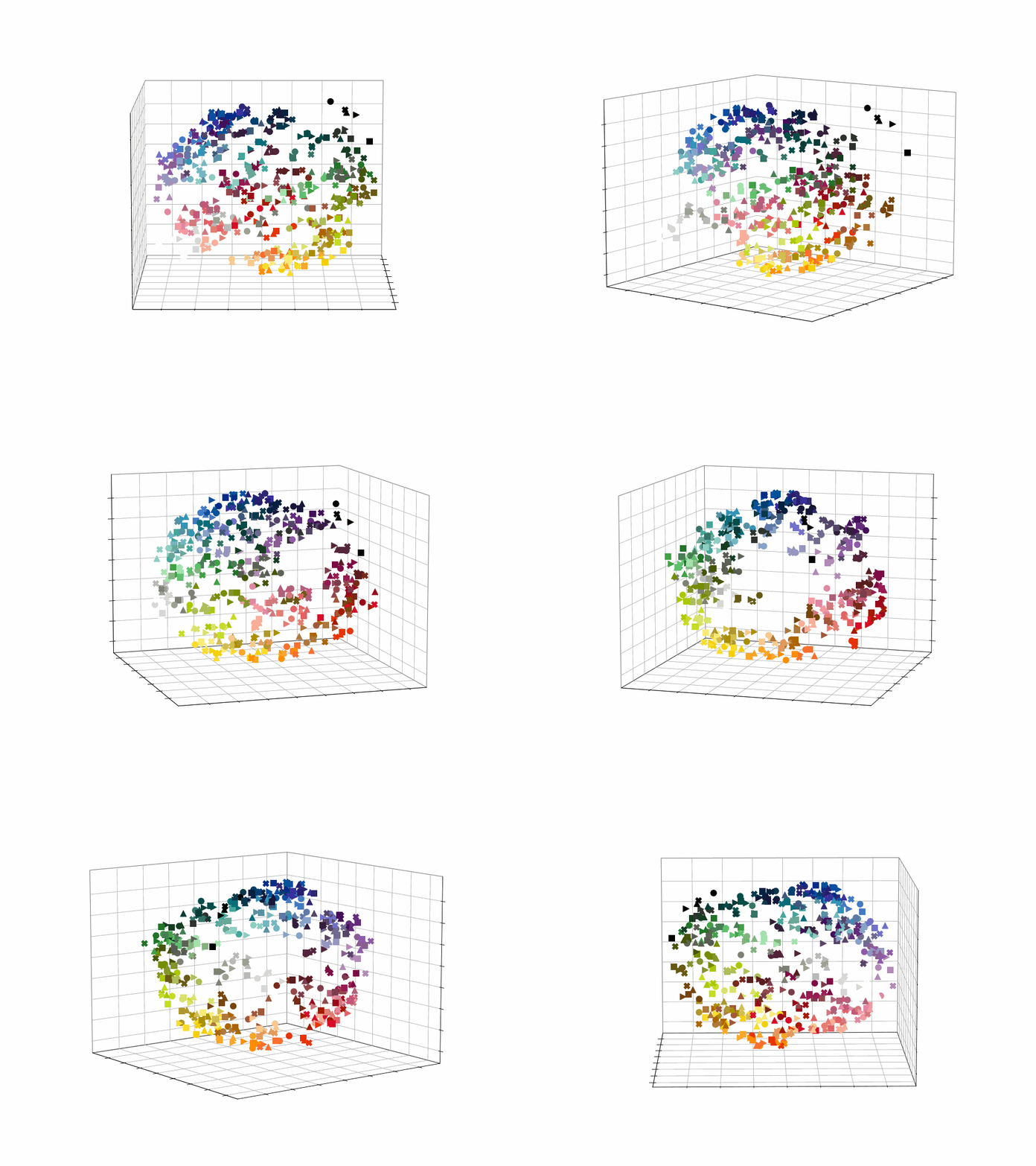
Genji Kawakita*, Ariel Zeleznikow-Johnston*, Ken Takeda*, Naotsugu Tsuchiya**, Masafumi Oizumi** (2025) "Is my "red" your "red"?: Evaluating structural correspondences between color similarity judgments using unsupervised alignment." iScience, 28, 3, 112029.
Masafumi Oizumi, Chanseok Lim, Ryota Kanai (2025) "Principal bundle geometry of qualia: Understanding the quality of consciousness from symmetry". PsyArXiv
Soh Takahashi*, Sasaki Masaru*, Ken Takeda, Masafumi Oizumi (2026) "Investigating Fine-and Coarse-grained Structural Correspondences Between Deep Neural Networks and Human Object Image Similarity Judgments Using Unsupervised Alignment." Neural Networks, 195, 108222.
Haruka Asanuma, Naoko Koide-Majima, Ken Nakamura, Takato Horii, Shinji Nishimoto et al. (2025) "Correspondence of High-Dimensional Emotion Structures Elicited by Video Clips Between Humans and Multimodal LLMs." Scientific Reports, 15, 32175.
Qualia structure paradigm image 1
Qualia structure paradigm image 2

Levels of consciousness

In addition to the standard network theory approach, we have recently applied thermodynamics to characterize irreversibility of dynamics, or the thermodynamic "cost", relating this quantity to the difference between conscious and unconscious states.

Key Publications
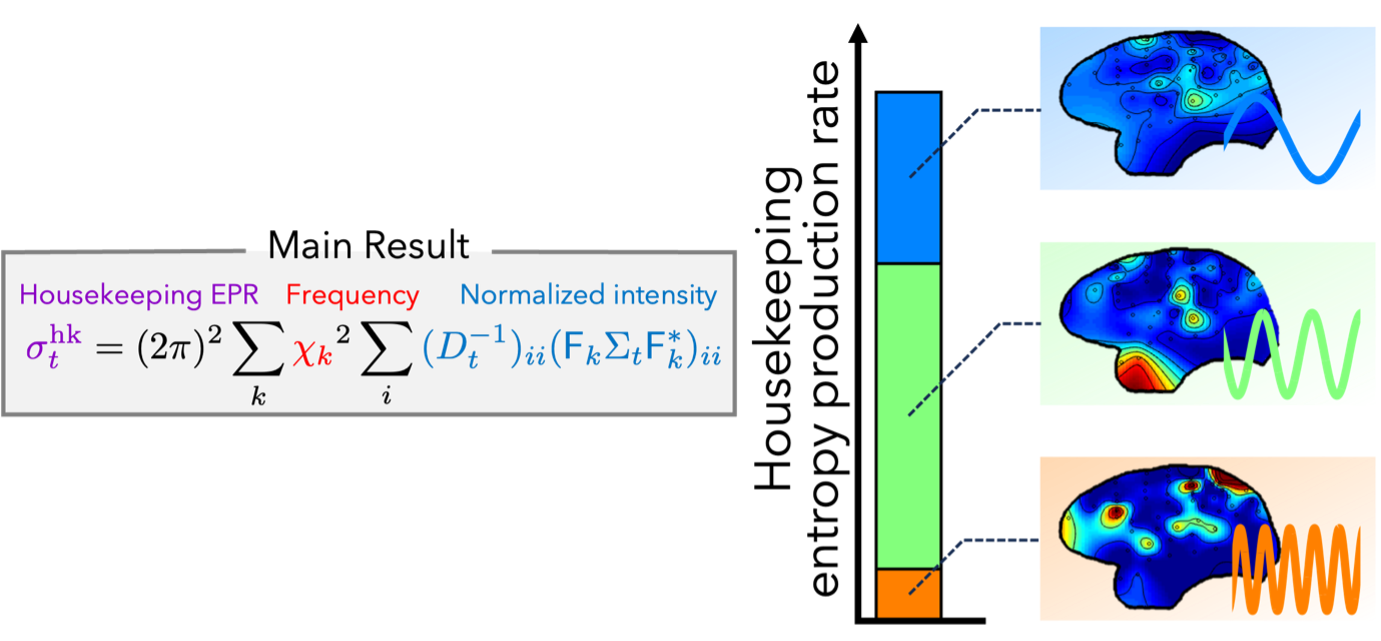
Daiki Sekizawa, Sosuke Ito, Masafumi Oizumi (2024) "Decomposing thermodynamic dissipation of linear Langevin systems via oscillatory modes and its application to neural dynamics". Physical Review X 14 (4), 041003.
Daiki Kiyooka*, Ikumi Oomoto*, Jun Kitazono, Midori Kobayashi, Chie Matsubara et al. (2026) "Single-cell resolution functional networks during sleep are segregated into spatially intermixed modules". Cell Reports, in press.
Daiki Sekizawa, Sosuke Ito, Masafumi Oizumi (2025) "Koopman Mode Decomposition of Thermodynamic Dissipation in Nonlinear Langevin Dynamics". arXiv.
Levels of consciousness image 1

Location of consciousness

Experimental evidence suggests that both feed-forward and feedback processing are necessary for the brain to generate a conscious experience. To identify the location of consciousness in the brain, we are trying to locate a bidirectionally connected network core.

Key Publications
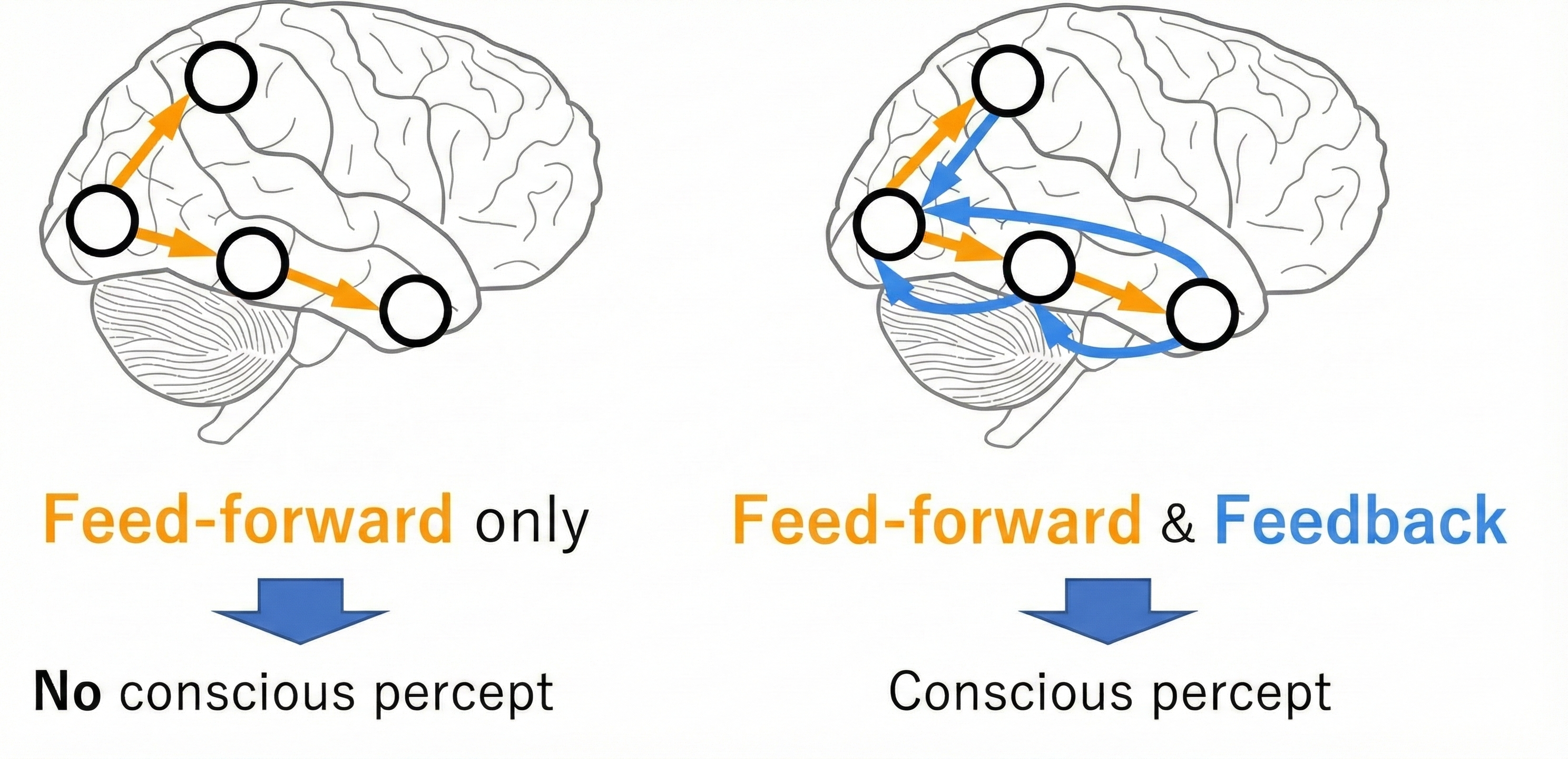
Jun Kitazono, Yuma Aoki, Masafumi Oizumi (2022) "Bidirectionally connected cores in a mouse connectome: Towards extracting the brain subnetworks essential for consciousness." Cerebral Cortex, bhac143.
Taguchi, Tomoya, Jun Kitazono, Shuntaro Sasai, and Masafumi Oizumi (2025) "Association of bidirectional network cores in the brain with conscious perception and cognition." The Journal of Neuroscience, 45(17), e0802242025.
Jun Kitazono, Ryota Kanai, Masafumi Oizumi (2020) "Efficient search for informational cores in complex systems: Application to brain networks." Neural Networks, 132, 232-244.
Location of consciousness image 1

Control theory for revealing causal relations

A control theory framework can be useful for revealing causal relations in brain networks. Recently, we have proposed practical methods for quantifying controllability, controllable directions, and control costs in neural systems.

Key Publications
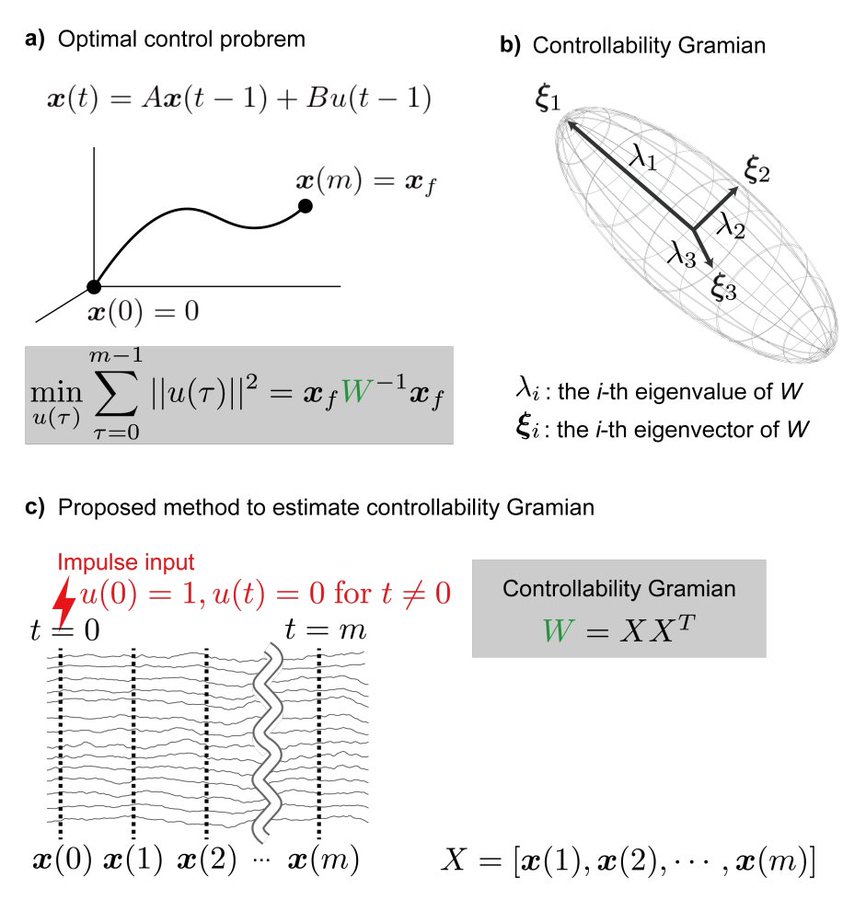
Yumi Shikauchi, Mitsuaki Takemi, Leo Tomasevic, Jun Kitazono, Hartwig R. Siebner et al. (2025) "Quantifying state-dependent control properties of brain dynamics from perturbation responses." bioRxiv: 2025-02.
Mikito Ogino, Daiki Sekizawa, Jun Kitazono, and Masafumi Oizumi (2025) "Designing optimal perturbation inputs for system identification in neuroscience." bioRxiv.
Shunsuke Kamiya, Genji Kawakita, Shuntaro Sasai, Jun Kitazono, Masafumi Oizumi (2023) "Optimal Control Costs of Brain State Transitions in Linear Stochastic Systems." The Journal of Neuroscience, 43 (2), 270-281.
Genji Kawakita, Shunsuke Kamiya, Shuntaro Sasai, Jun Kitazono, Masafumi Oizumi (2022) "Quantifying brain state transition cost via Schrödinger's bridge". Network Neuroscience, 6 (1), 118–134.
Control theory for revealing causal relations image 1

Integrated Information Theory (IIT)

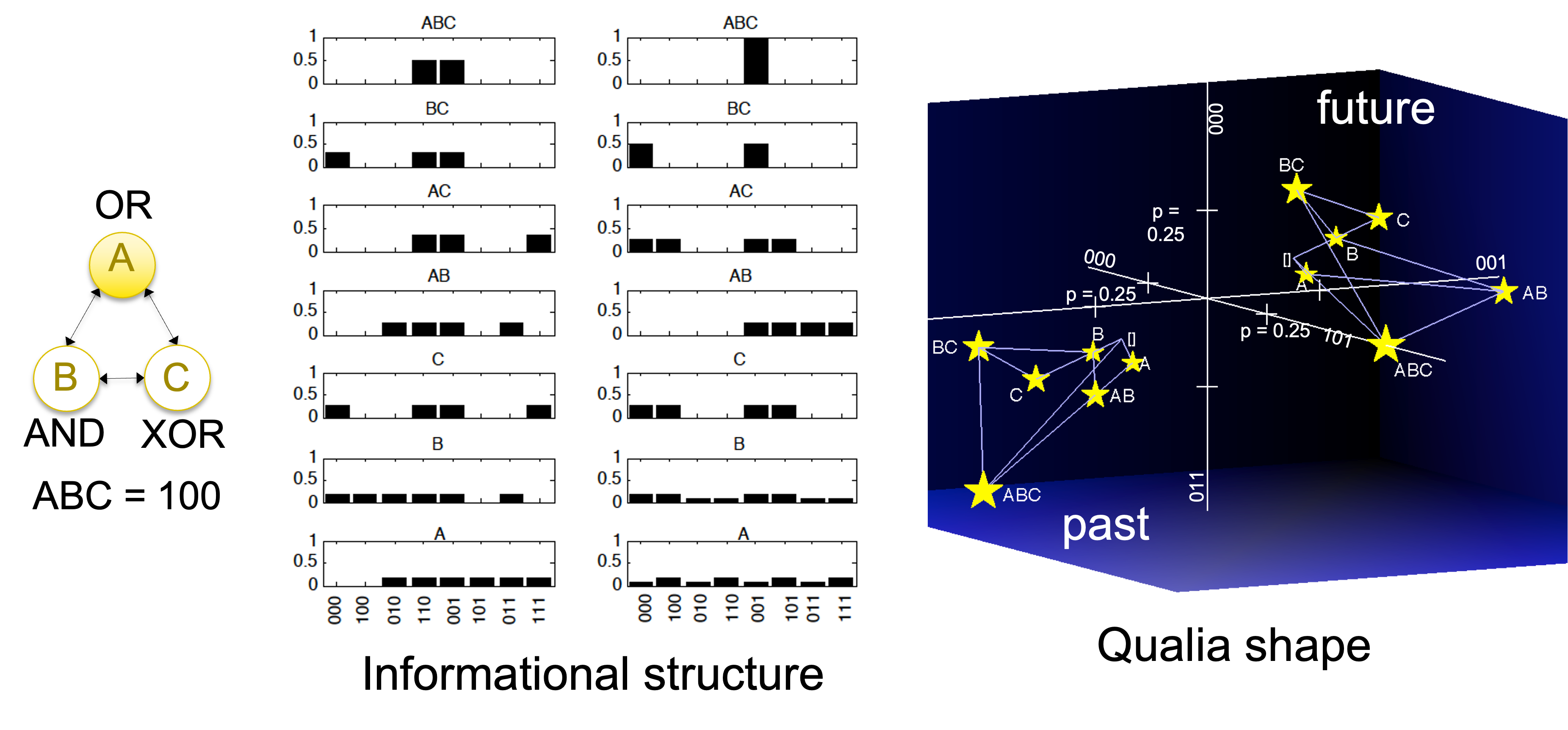
We are working on the theoretical development and experimental verification of Integrated Information Theory (IIT). Specifically, we are developing practical algorithms to quantify IIT-based quantities, such as integrated information and the "complex" (informational core) in real neural data.
Key Publications

Masafumi Oizumi*, Larissa Albantakis*, Giulio Tononi (2014) "From the Phenomenology to the Mechanisms of Consciousness: Integrated Information Theory 3.0". PLoS Computational Biology, 10, e1003588.
Masafumi Oizumi, Naotsugu Tsuchiya, Shun-ichi Amari (2016) "Unified Framework for Information Integration Based on Information Geometry". Proceedings of the National Academy of Sciences, 113(51), 14817-14822.
Masafumi Oizumi, Shun-ichi Amari, Toru Yanagawa, Naotaka Fujii, Naotsugu Tsuchiya (2016) "Measuring Integrated Information from the Decoding Perspective". PLoS Comput Biol, 12(1), e1004654.
Melanie Boly, Shuntaro Sasai, Olivia Gosseries, Masafumi Oizumi, Adenauer Casali et al. (2015) "Stimulus Set Meaningfulness and Neurophysiological Differentiation: A Functional Magnetic Resonance Imaging Study." PLoS ONE, 10(5): e0125337.
Andrew M. Haun, Masafumi Oizumi, Christopher K Kovach, Hiroto Kawasaki, Hiroyuki Oya et al. (2017) "Contents of Consciousness Investigated as Integrated Information in Direct Human Brain Recordings". eNeuro, ENEURO-0085-17
Integrated Information Theory (IIT) image 1