Bridging Brain and Consciousness
through Mathematics

We are the Oizumi Laboratory at the University of Tokyo. Our research tries to mathematically bridge the gap between neural activities and subjective experiences.

Join usMeet the Team

Announcements

December 1, 2025Recruitment for postdocs

We are hiring 1–2 postdocs for next year. Please feel free to reach out if you are interested in research such as (1) Inter-brain information translation & control (2) Characterizing brain states via thermodynamics & control theory (3) Comparing qualia structures across individuals and identifying their neural substrates. Please see this page for the details.

Featured Research

Is My Red Your Red? Structural Correspondences in Color Qualia
March 21, 2025

Is My Red Your Red? Structural Correspondences in Color Qualia

We introduced a 'qualia structure paradigm' to compare subjective color experiences. Using massive online data, we found that color similarity judgments align at the group level for neurotypical participants, offering a new approach to the problem of qualia.

Relation between neural oscillations and thermodynamic dissipation
August 1, 2024

Relation between neural oscillations and thermodynamic dissipation

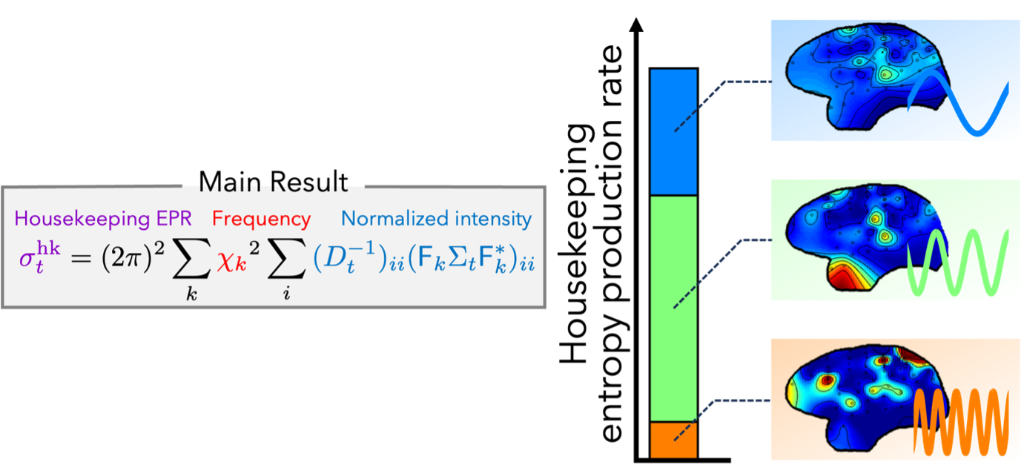
We theoretically derived a relation connecting thermodynamic dissipation and neural oscillations. Applying this to monkey ECoG data, we revealed that thermodynamic dissipation originates from different frequency bands depending on the brain state.

Quantifying control costs in stochastic neural systems
January 12, 2023

Quantifying control costs in stochastic neural systems

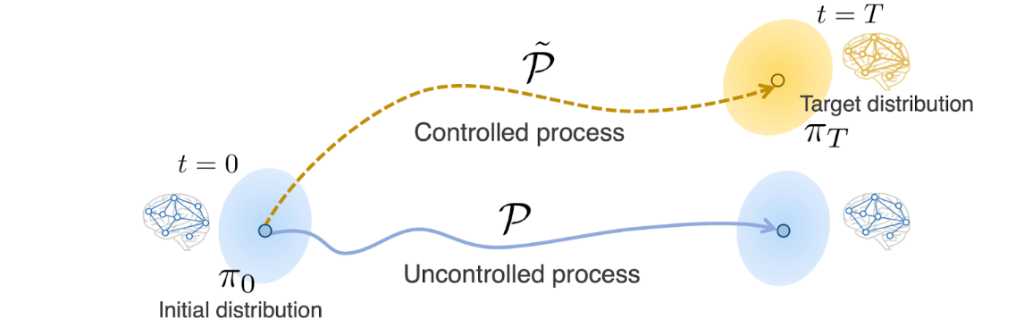
We proposed a new method to quantify the control cost required for the brain to transition between states. Applying this to fMRI data, we identified brain regions that contribute to the control of brain states during various cognitive tasks.

Identifying bidirectionally connected cores towards finding the place of consciousness
July 21, 2022

Identifying bidirectionally connected cores towards finding the place of consciousness

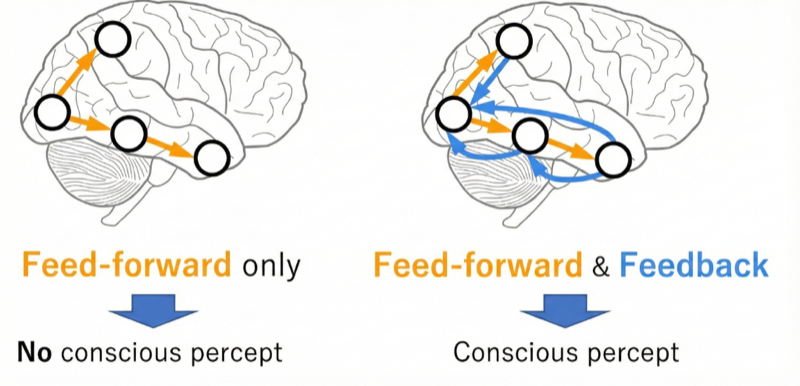
We proposed that strong bidirectional connections are essential for consciousness. By developing a new algorithm to identify 'cores' of bidirectional networks, we found that these cores correspond to brain regions associated with consciousness.